
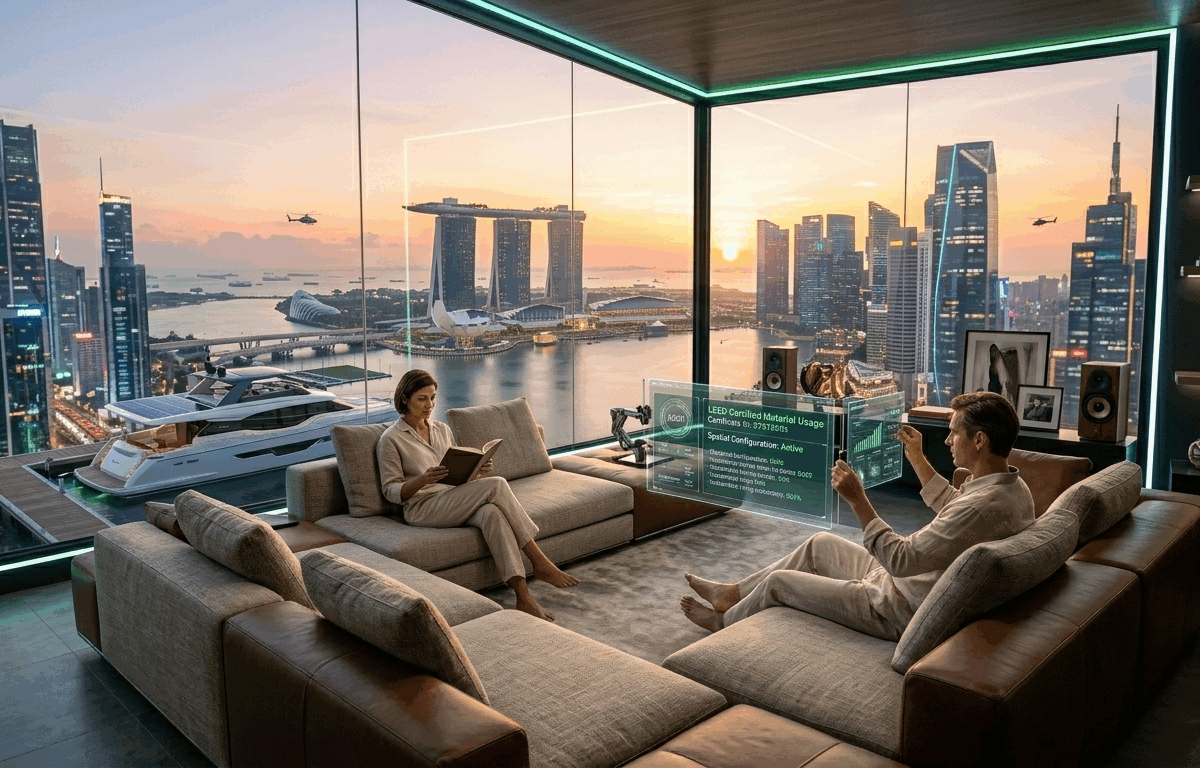
The Future of Residential Design: Integrating High-End Smart Technology into Modern Interiors
Modern luxury interior design is no longer defined solely by high-end furniture and marble finishes—it is increasingly defined by invisible technology. Today’s high-net-worth homeowners are seeking spaces that seamlessly integrate automated systems without compromising on refined visual aesthetics. Smart home interior design bridges the gap between sophisticated architectural beauty and modern digital convenience.
Blending High-Tech Automation with Elegant Aesthetics
The challenge of incorporating technology into modern luxury interiors lies in keeping hardware invisible. Advanced interior designers utilize clever architectural techniques to ensure tech enhances the ambiance rather than disrupting it:
- Hidden Architectural Lighting: Dynamic, human-centric LED lighting systems programmed to adjust color temperature throughout the day to support circadian rhythms.
- Concealed Audio & Visual Systems: In-wall architectural speakers painted over to match custom drywall, paired with motorized artwork that reveals flat-screen TVs at the touch of a button.
- Automated Motorized Window Treatments: Custom drapery and shades integrated into ceiling recesses that automatically adjust based on sunlight exposure and room temperature.
Comparative Advantage: Traditional vs. Smart Luxury Interiors
| Feature | Traditional Luxury Interior | Integrated Smart Interior |
| Lighting Control | Manual wall switches and dimmers | Automated circadian scenes via smartphone or voice |
| Climate & Shade Control | Individual manual thermostats | AI-driven energy optimization based on daily routines |
| Aesthetic Impact | Visible wiring, outlets, and remotes | Fully concealed hardware integrated into millwork |

Hello Welcome to my wood carpentry blog